
Sources Behind Moorpark Previous Residents
Moorpark's backward address trail spans county records, regional telephone books, open census schedules, city files, and local history collections. Ventura County was formed in 1873, so earlier land or court leads can point to Santa Barbara County. Moorpark incorporated in 1983, which means a pre-city address trail belongs mainly in county records rather than a modern municipal series.
| Source | Years It Covers | Where Held | What It Shows |
|---|---|---|---|
| Ventura Recorder online index | Start date not stated | Recorder Self-Service | Indexed parties, instruments, dates, and legal descriptions |
| Legacy deed books and indexes | County records after 1873; exact split unverified | Ventura or East County counter and archives | Grantor-grantee chain and document images |
| Pacific Bell Simi-Ventura books | Feb. 1990, Aug. 1990, Feb. 1991, Aug. 1992, Feb. 1993 | LA County Library Californiana holdings | Listed names, addresses, and phone entries |
| Thousand Oaks YP/WP books | 2001, 2002-03, 2003, 2004-05, 2005, 2006 | Regional reference holdings | Later listed address and business clues |
| Federal census schedules | Through 1950 public | NARA, FamilySearch, and library databases | Enumerated households at the census date |
| Moorpark Enterprise | 1915-1955 | Museum of Ventura County Research Library | Obituaries, legal notices, addresses, schools, and community news |
| City permits and GIS | Current systems; full historical span not stated | Moorpark Planning, Building, GIS, and NextRequest | Project chronology, parcel context, applicants, and owner authorization |
Use the deed and parcel rows for ownership, the directory rows for listed telephone households, the census for an older enumerated household, and the newspaper or probate trail for life events. No single source spans every Moorpark decade, so a Moorpark previous residents search must label each clue by source and date.
Moorpark Previous Residents Start With Today’s Parcel
Normalize the address in USPS ZIP Code Lookup and County View. Confirm the situs, city jurisdiction, parcel outline, APN, and tract or lot reference. Then open the Assessor's property detail and preserve the owner display, mailing address, assessment clues, and map link with the date of the search.
The current owner is a starting point, not the first person who lived there. A mailing address can differ from the situs, and an assessed owner need not be an occupant. The APN, legal description, and parcel geometry give the backward trail a stable anchor before names begin to change.
When a parcel sits near a city edge, use County View and Moorpark City GIS to decide which planning office holds a permit. The Moorpark GeoViewer adds local zoning and planning context, while the county viewer keeps regional parcel continuity in view.
Moorpark Previous Residents in the Deed Chain
Recorded instruments are the strongest route to past owners. For Moorpark previous residents, begin with the present parcel, then use the Recorder's party index to move from the current grantee to the earlier grantor. Date each step and compare the legal description so a similar name or nearby lot does not bend the chain toward the wrong address.
- Record the APN, tract or lot, situs, and current assessed owner from the parcel and roll.
- Search the current owner as grantee in Recorder Self-Service and narrow by a plausible date or document type.
- Read the instrument reference, grantor, grantee, recording date, document number, and legal description.
- Search the grantor as grantee in an earlier period, then compare the same parcel description.
- Repeat until the online index ends, a name variant blocks the trail, or the chain reaches a legacy book.
- Take the citation to the Recorder counter or request the next image or copy through the current office process.
- Grantor
- The party transferring or releasing an interest in the recorded instrument.
- Grantee
- The party receiving the interest or benefit named in that instrument.
- Chain of title
- The connected sequence of recorded interests that links one parcel holder to an earlier holder.
- Legal description
- The tract, lot, or metes-and-bounds wording that identifies land more durably than a changing street label.
Moorpark Deed Searches for Past Residents
Ventura's recorded-document gateway offers Combined, Grantor, and Grantee modes. Combined treats the party as either role; Grantor narrows to filings from that party; Grantee narrows to filings to that party. Search Spanish compound surnames, initials, hyphens, suffixes, trusts, and corporate names. The index itself warns that it is a catalog to the underlying record, not a substitute for the document.
The public gateway does not state its online cutoff. Treat that omission as a research gap. The Recorder Division can confirm the date span and older deed-book or microfilm method at 805-654-3665. Main counter service is at Hall of Administration, 800 S. Victoria Avenue, Ventura, Monday through Friday 8 to 4:45. The East County Clerk-Recorder at 2100 E. Thousand Oaks Boulevard, Suite A, may be a closer in-person route.
Mail and counter requests remain available, and a records request can identify an existing document by APN, party, recording date, and document number. Copy and certification charges change, so use the current county schedule rather than an old form.
Moorpark Past Residents, Directories and Census
Directories can place a listed name at an address between census years, while the census can show an enumerated household at one official date. For pre-incorporation Moorpark, search Ventura County township, precinct, or enumeration district rather than assuming modern city limits. The federal schedules through 1950 are public; individual 1990 schedules are not open, so the 1990 aggregate census can supply context but not a named household.
- Choose the address and write down every spelling, road name, and known tract or lot clue.
- Check an available telephone edition and record the exact listing, street number, and first or last appearance.
- Place the address in the nearest open census schedule or enumeration district, keeping the census date separate from the directory date.
- Use a deed, permit, newspaper, or obituary to test whether a move, sale, construction event, or death explains the gap.
- Mark an absent listing as unknown unless another source explains it; unlisted service, coverage boundaries, publication lag, and OCR can all matter.
The Moorpark city directory collections are regional and uneven, not an annual roll. A good past-resident trail labels each source as owner, listed subscriber, enumerated household, project participant, or life-event witness. That distinction keeps previous residents research from overstating what a listing proves.
Moorpark Telephone Years for Past Residents
LA County Library's official Californiana inventory is the clearest located source for Moorpark's 1990-93 telephone coverage. It lists Pacific Bell's Simi-Ventura address and phone editions for February 1990, August 1990, February 1991, August 1992, and February 1993. Later Thousand Oaks YP/WP books include Moorpark in 2001, 2002-03, 2003, 2004-05, 2005, and 2006.
A 2022 city-hosted environmental assessment says a consultant checked Moorpark City Library and found no local street directories. The library still offers reference help at 699 Moorpark Avenue, 805-517-6370, askus@moorparklibrary.org, with posted hours Monday through Thursday 10 to 8, Friday and Saturday 10 to 5, and Sunday 1 to 5. Ask staff to confirm a regional call number rather than assuming a local shelf exists.
These telephone books can show a listed subscriber and address. They do not prove title, every household member, a move date, or an unlisted number. Preserve the edition and page reference when a past resident clue matters.
Moorpark Enterprise and Past Residents
The Museum of Ventura County Research Library is a strong county fallback for past residents. Its collection includes directories, census records, voter indexes, assessor rolls, property records, maps, manuscripts, newspapers, photographs, and biographical files. It holds the Moorpark Enterprise from December 30, 1915 through December 29, 1955, a run that can add obituaries, legal notices, addresses, school items, and community reports.
The Research Library is free and appointment-only Wednesday through Friday, 11 to 5, at 100 E. Main Street in Ventura. Call 805-653-0323 extension 320 or write library@venturamuseum.org. The Moorpark Historical Society, founded in 1979, is another local-history lead; recent city material reports a $5,000 California State Library grant to digitize and archive remaining Society materials.
No authoritative Moorpark Sanborn sheet year was located. Ask the Museum or Library of Congress catalog staff for a specific sheet rather than inserting a guessed map date. Tract maps, architectural drawings, permits, and the new library planning record can sometimes date a structure even when a fire-insurance map is absent.
PACER and Moorpark Previous Residents
A court record can explain an estate, lien, bankruptcy, or other event in an address trail, but the court system must match the question. Ventura Superior Court handles local civil, probate, family, criminal, traffic, and small-claims matters through division-specific Case Inquiry and Records Department channels. Federal matters from Ventura County use PACER, the national federal docket system.
The PACER source image belongs in a federal-records check, not a general Moorpark resident list.
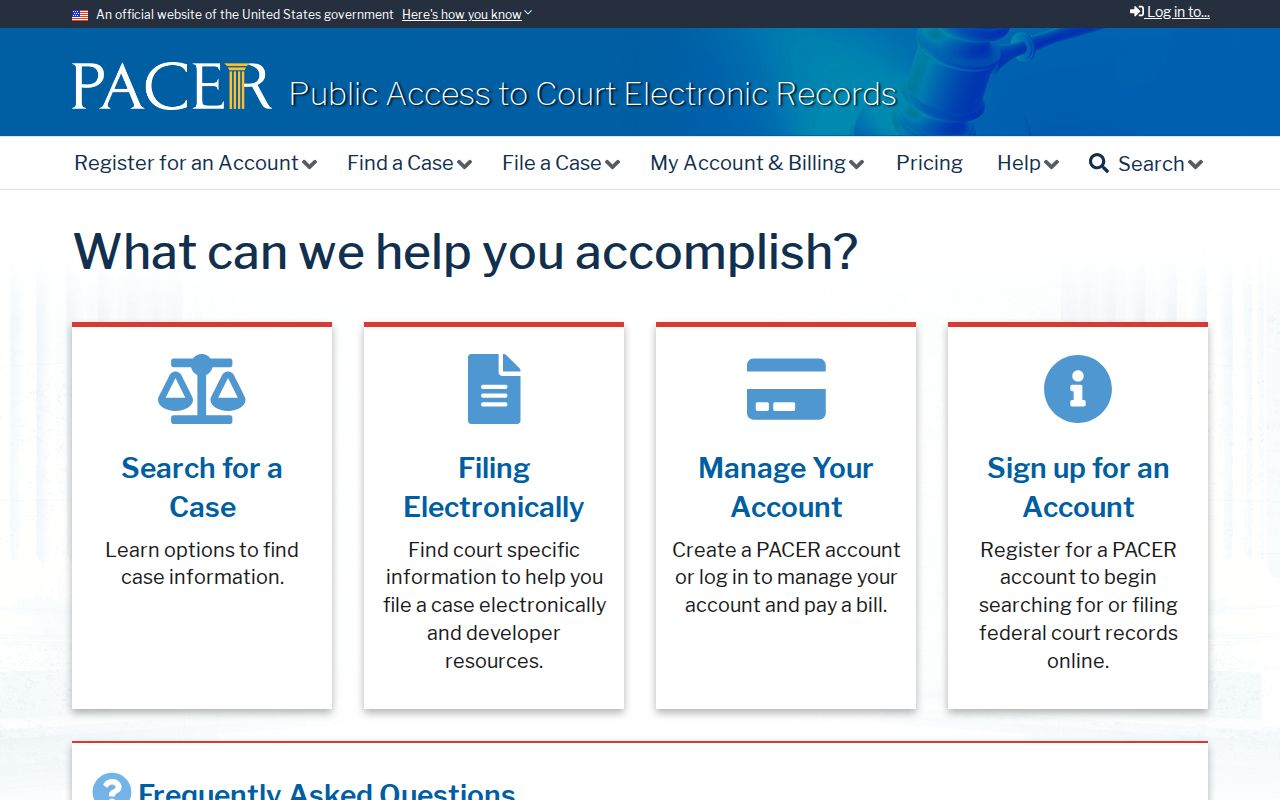
PACER can identify a federal party or case trail under its current access rules, but it does not replace a deed, a probate file, or a Superior Court disposition. Match the case number and party role to the parcel history before drawing a house-history conclusion.
Past Moorpark Households and Obituaries
Owners are only one layer of past residents. A directory can place a listed subscriber at a street address; a census can show the household counted on one date; the Moorpark Enterprise can connect a former resident to an obituary, school, organization, service, or legal notice. Probate may identify a decedent, petitioner, heirs, or notices when the property trail reaches an estate. Funeral-home and newspaper statements still deserve comparison with the vital or court record. For previous residents, each source should be kept tied to its own date and purpose.
Permits date a building event, not every move. A later deed can show transfer without proving who occupied the parcel. Keep those limits beside each entry in the research log, and stop when a living person's private details would have to be guessed.
Lawful house history. Moorpark previous-resident research is appropriate for family history, estate work, restoration, and personal curiosity. Do not use a record trail to stalk, harass, intimidate, or repeatedly track a living person.
Note: When an address trail stops, label the gap and ask the named custodian or archive for the next lawful record instead of filling it with an assumption.